Scenario Game Workshop
Democratising Strategic Foresight
In collaboration with the Bavarian Foresight Institute, this project focused on refining a newly developed scenario-based workshop format. The goal was to make complex foresight methods accessible to beginners by transforming them into an intuitive, engaging, and usable experience.
I led the game design track within the team, taking responsibility for the conceptual structure of the workshop, including user journeys, interaction logic, and facilitation support. While another team focused on visual design, my role was to ensure that the experience itself was understandable, usable, and meaningful for both participants and moderators.
We structured the project into three phases: Understanding, Concept, and Design & Prototyping. The process began with an unusual but crucial step: participating in the workshop ourselves.

Experiencing the workshop firsthand immediately revealed structural issues. Participants were overwhelmed early on due to too much information being introduced at once. Key steps lacked clarity, decisions such as selecting trends were difficult without guidance, and there was no clear progression or sense of orientation throughout the process. Even fundamental tasks, like translating trends into scenarios, were unclear for first-time users.
To structure these observations, I created a detailed customer journey map capturing the full participant experience, including emotional highs and lows, confusion points, and moments of friction.

This made it possible to clearly identify where the experience broke down and where opportunities for improvement existed. Importantly, I extended this perspective to include the moderator as a second key user. Despite being more experienced, moderators struggled with time management, guiding participants, and structuring the flow of the workshop.

This dual-user perspective became a central foundation of the concept. Instead of designing only for participants, the workshop was rethought as a system that supports both sides of the experience.
Based on these insights, we moved into ideation and early wireframing, exploring ways to simplify the process, guide users more clearly, and create a more engaging experience overall.
Ideation
Based on these insights, we moved into ideation and early wireframing, exploring ways to simplify the process, guide users more clearly, and create a more engaging experience overall.
The final concept is built on three core strategies: Refinement, Gamification, and Post-Game Value.


Refinement
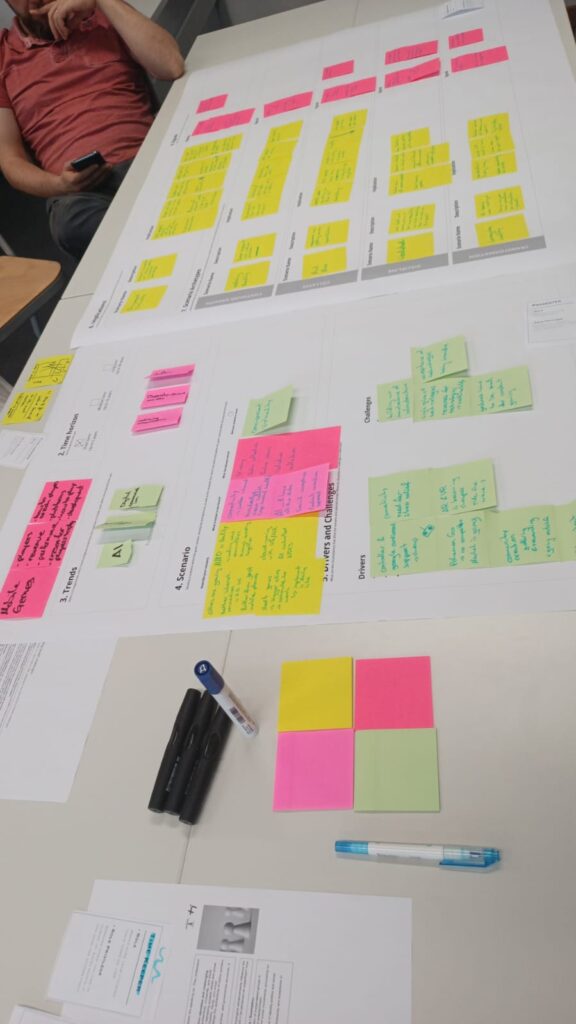
Refinement focused on usability and clarity. Information was restructured and distributed more intentionally to avoid overwhelming users. The canvas was redesigned to clearly separate input and output, making the process easier to follow. Important elements, such as selected trends, were made persistently visible to support orientation throughout the workshop. At the same time, complexity was reduced by simplifying language, limiting information per step, and introducing clearer guidance.
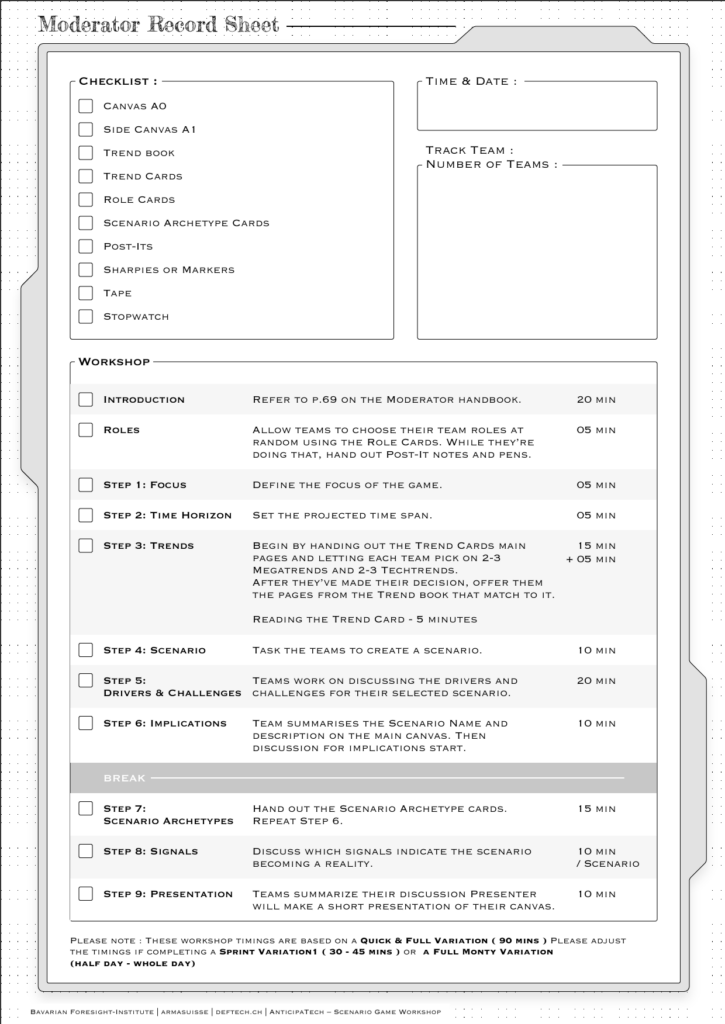
A key part of this refinement was designing for the moderator as an active user. I introduced a structured moderator handbook and a record sheet that functions as a step-by-step guide, including timing, material distribution, and facilitation support. This turned moderation from an expert-driven task into something that can be handled more confidently by non-experts.


Gamification
Gamification was introduced to make the experience more engaging and to lower the barrier to participation. I designed a system of role cards that assign clear responsibilities within each group, combined with playful privileges that encourage interaction and participation. These roles not only structure collaboration but also create a more dynamic and enjoyable atmosphere.

Role Feedback from Testing
Participant „Leader“„Ah, this is a great role for me!“
Participant „Challenger“„I love this privilege!“
Participant „Visualiser“„Excuse me? That is MY role. I tell MYSELF that I have ugly handwriting!“
Post-Game
Finally, the Post-Game strategy addressed a major gap in the original workshop: what happens after it ends. The redesigned canvas integrates signals and implications, allowing participants to track developments and reflect on their scenarios beyond the workshop itself. This extends the value of the exercise from a one-time activity to an ongoing thinking tool.

Testing
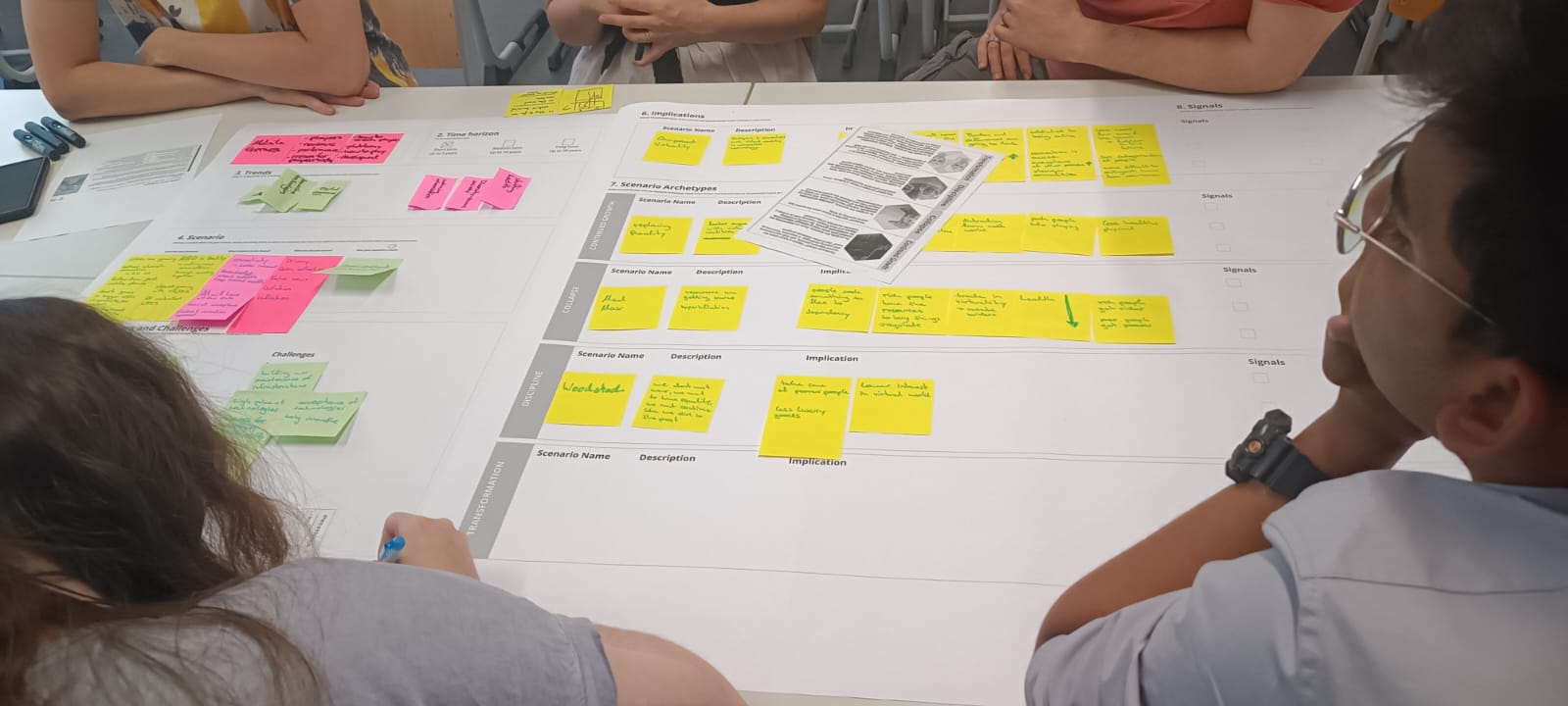
The concept was validated through a second round of testing with new participants. We collected structured feedback focusing on usability, engagement, and overall flow, and synthesised the results using affinity diagramming.
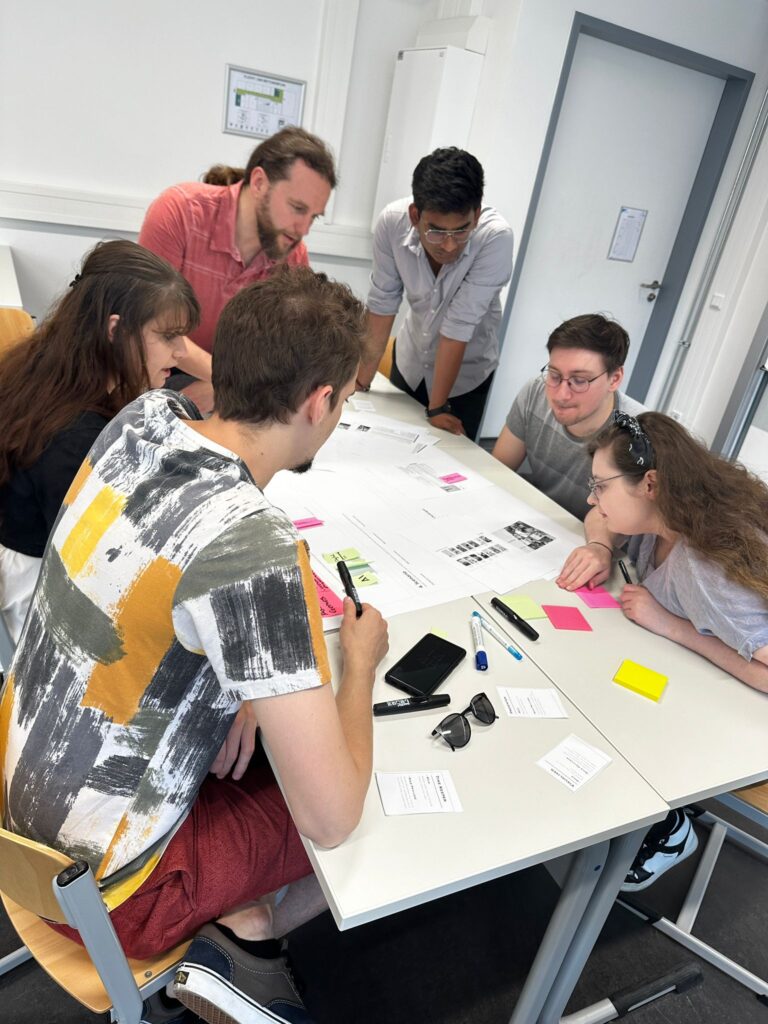

The final outcome is a refined, modular workshop system that transforms a complex foresight methodology into an accessible, guided, and engaging experience. By combining clear structure, thoughtful interaction design, and playful elements, the workshop enables participants with no prior knowledge to actively engage with future thinking.
Affinity Diagramming

Final Workshop Equipment
Canvas Side (A1)

Canvas Main (A0)
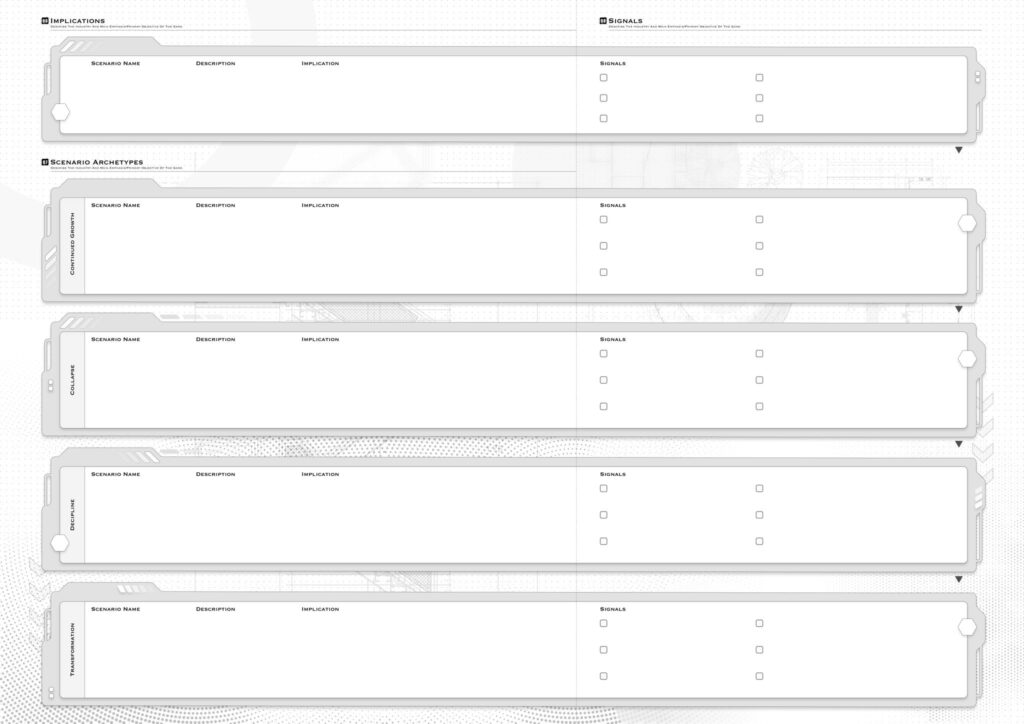
Trend Cards (A4)


Role Cards (A4)

Scenario Archetypes (A4)

Instructor Manual (A4)
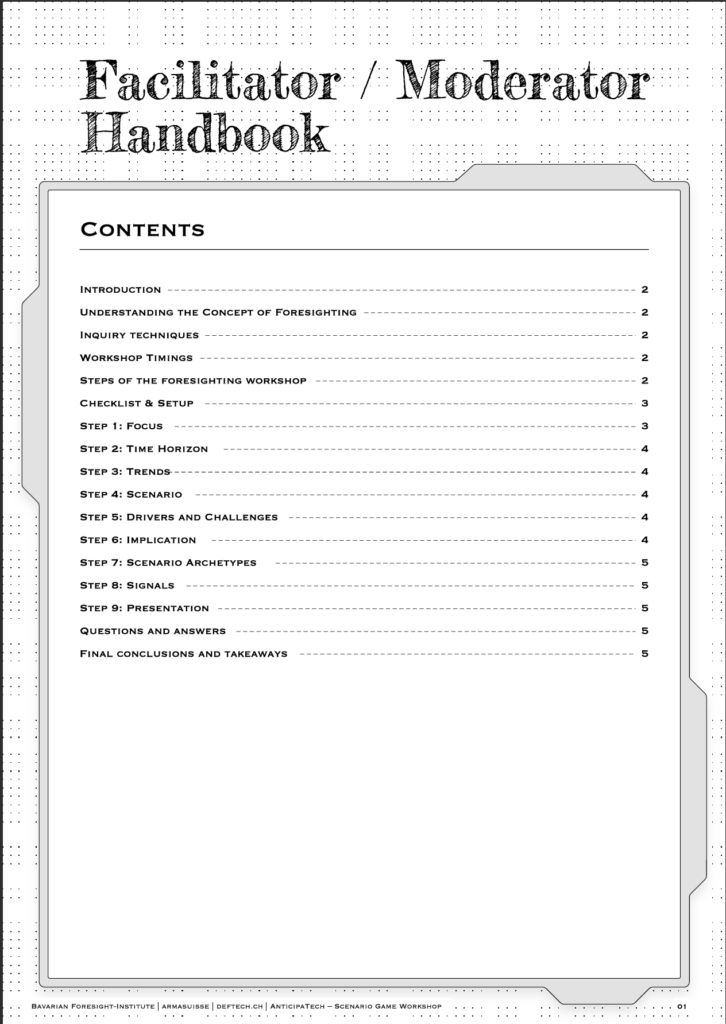
Moderator Record Sheet (A4)